Skip to content
Hassan Ahmed
Hassan Ahmed

San Francisco · Co-founder & CPO, ReechOut · Harvard Ed.M. 2026

From Olympiad math to building AI startups.

Three-time International Mathematical Olympiad contestant. Physicist by training. Founded and ran an education company across 15+ countries and 1,000+ students. Harvard master’s in learning design and technology.

I have spent my life around hard problems. Now I build companies to solve them.

  • 3× IMO
  • 2 startups
  • 8 AI products shipped

The arc

One theme, start to finish.

  1. 2013

    National Math Olympiad champion

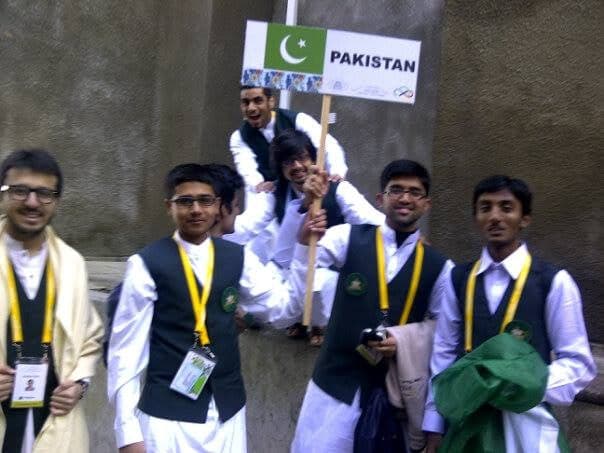
    Won the national olympiad. Spent more than half of every year from middle school through high school in math training camps, coached by international olympiad trainers.
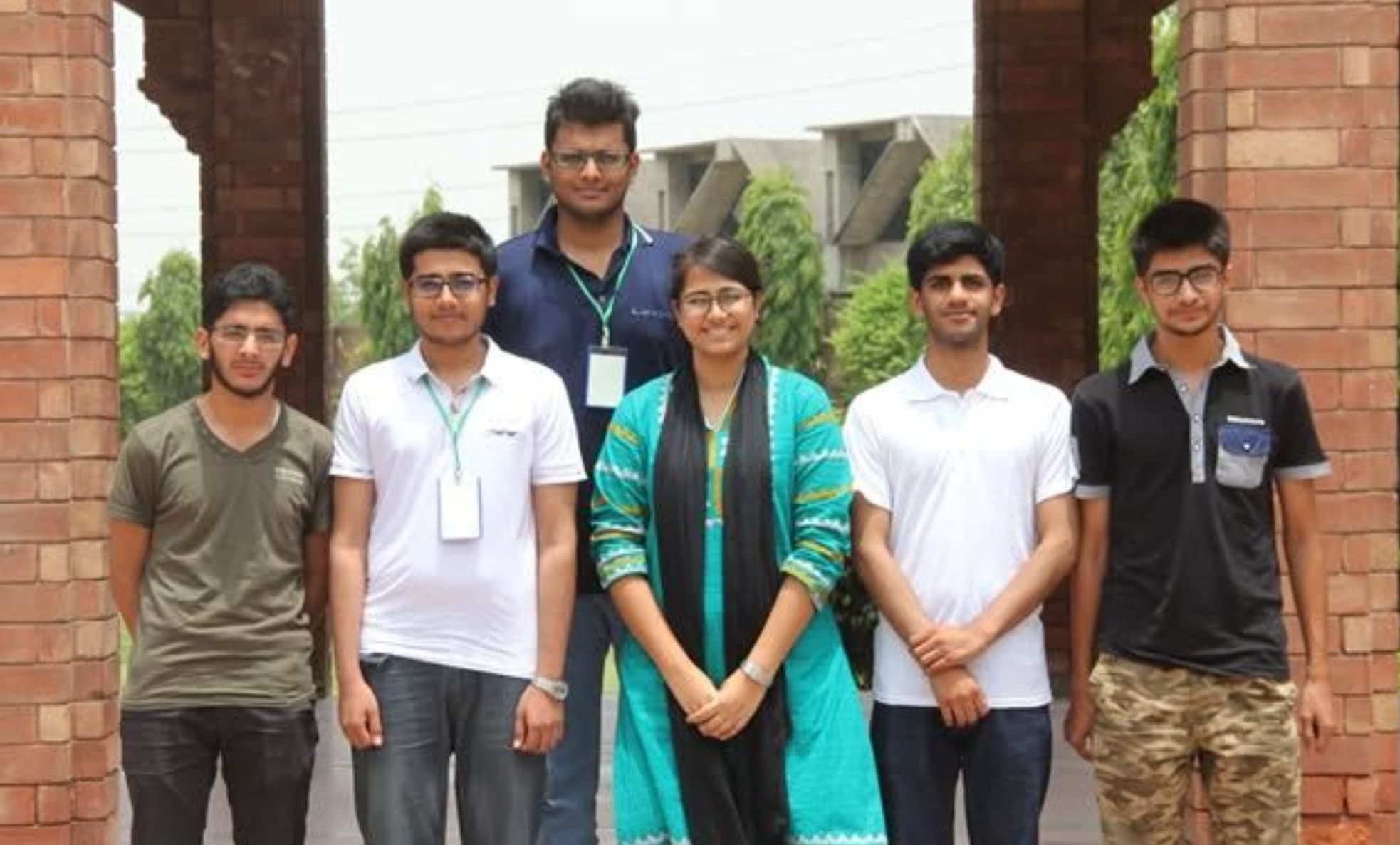
    National math olympiad contestants, 2013
  2. 2014

    IMO, Cape Town

    First International Mathematical Olympiad. Youngest on the team at 15.

    Hassan Ahmed at IMO 2014 in Cape Town
  3. 2016

    IMO, Hong Kong

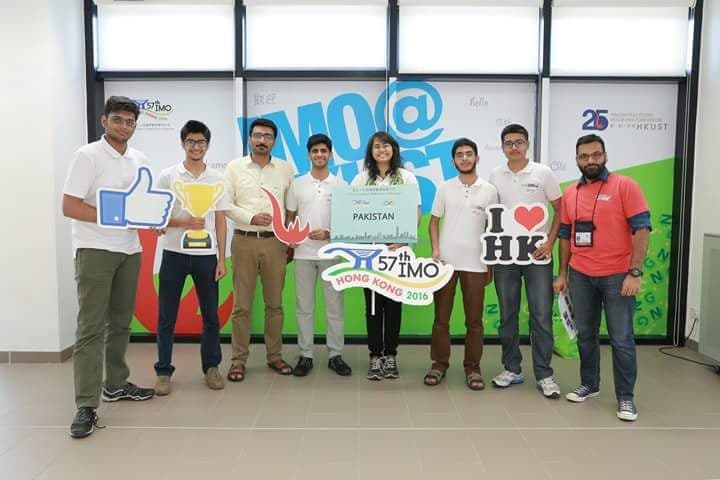
    Second IMO. Top in country, Cambridge IGCSE International Mathematics.

    Hassan Ahmed at IMO 2016 in Hong Kong
  4. 2017

    IMO, Rio de Janeiro

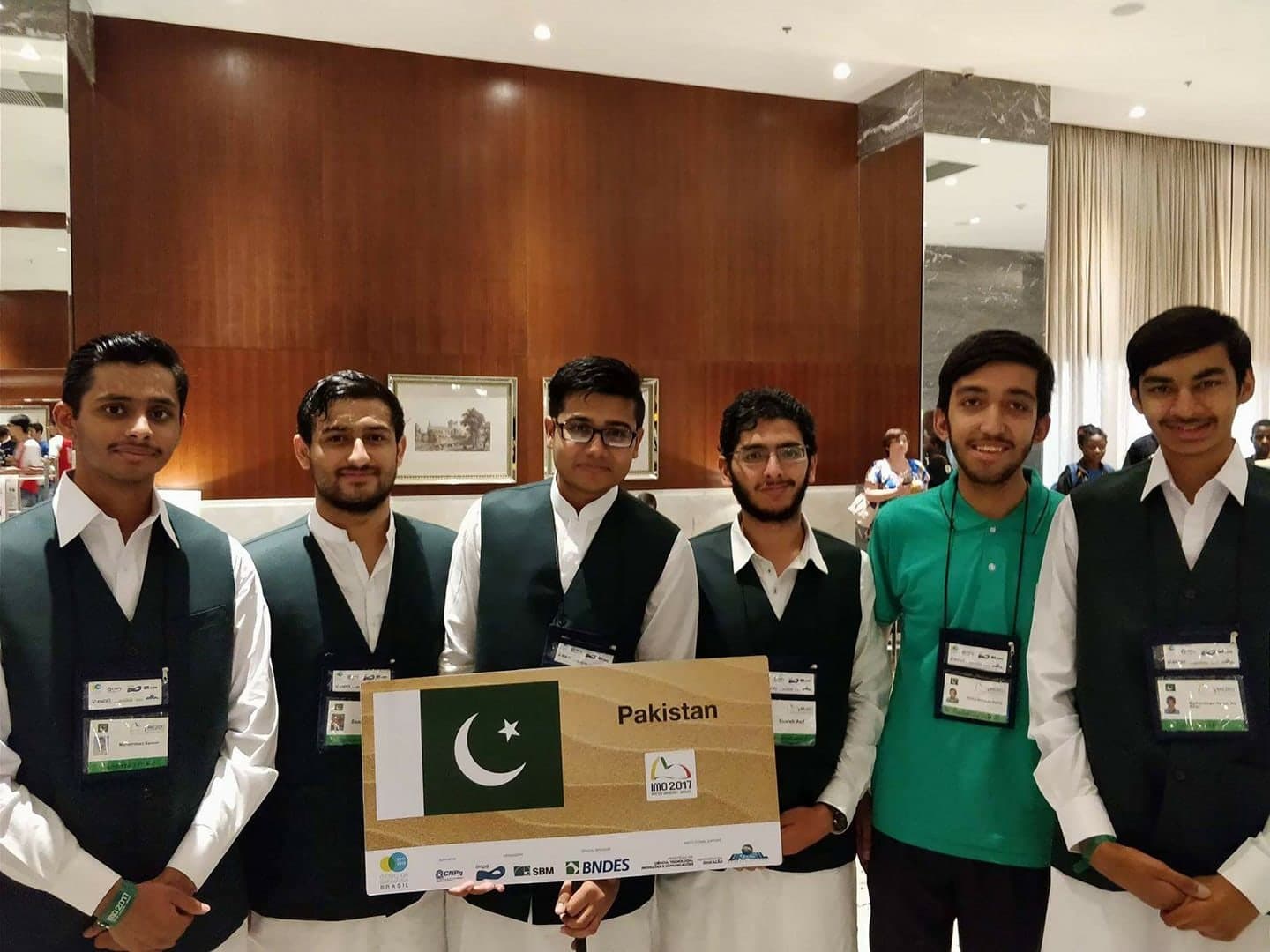
    Third IMO, Honorable Mention. Started a Physics degree at METU in the fall.

    Hassan Ahmed at IMO 2017 in Rio de Janeiro
  5. 2019

    Started teaching math online

    What began as a side income became 5,400+ hours of math teaching and a top 5% tutor ranking.

  6. 2020

    Machine learning research

    Exoplanet habitability classification on Kepler and TESS telescope data. XGBoost at 99.89% accuracy.
    Title card reading ML in Astronomy
  7. 2021

    Founded HSN Academy

    Olympiad and problem-solving math for middle and high school students. Grew from one teacher to a team of twelve, partnered with 20+ schools, 1,000+ learners across 15+ countries. Bootstrapped and profitable.

    Hassan Ahmed at a desk with books, a pen tablet, and a chess set
  8. 2025

    Harvard Graduate School of Education

    Learning design, with a year of close work alongside Dr. David Dockterman. Co-founded ReechOut at the Harvard Innovation Lab.
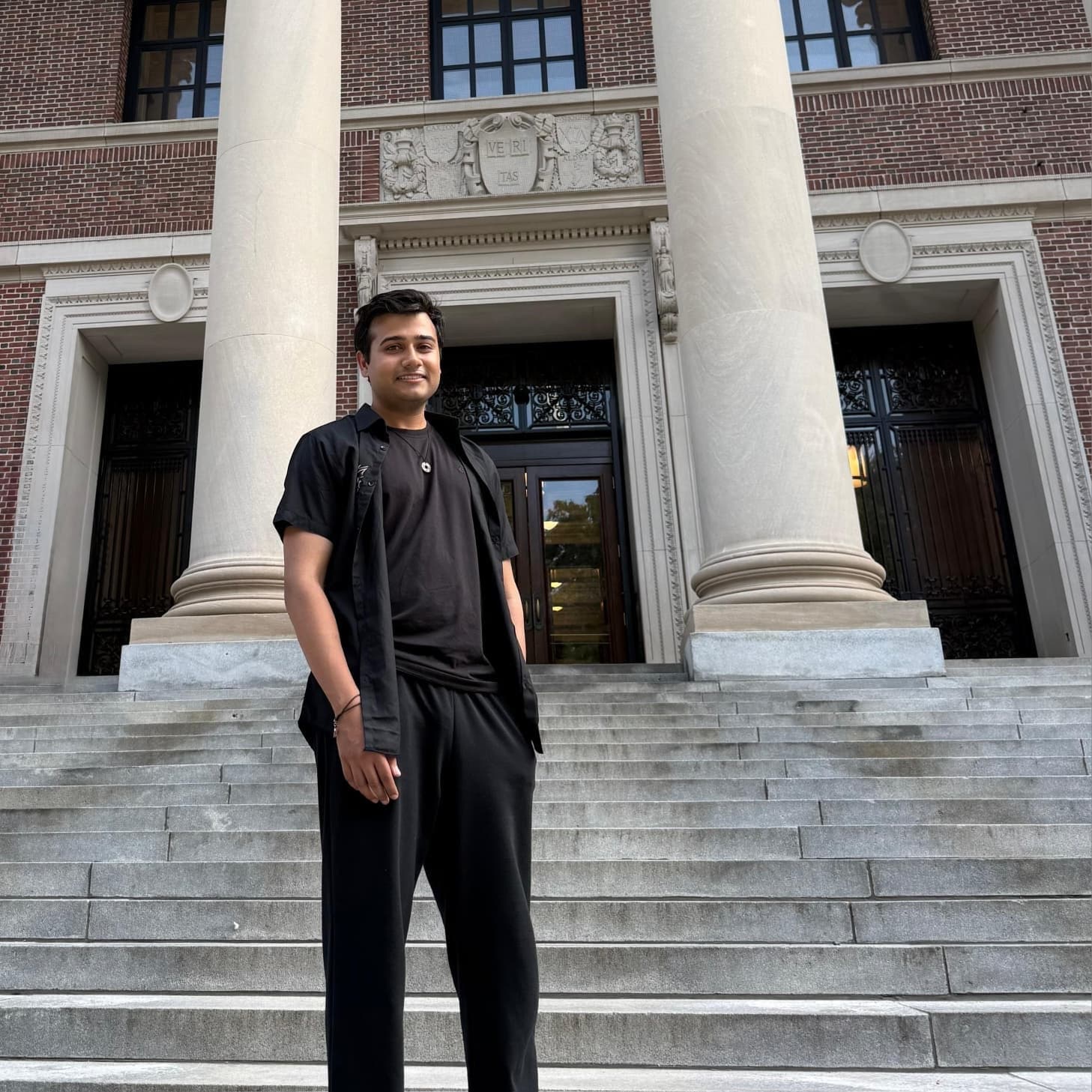
    Hassan Ahmed on the steps of Widener Library at Harvard
  9. 2026

    Harvard Ed.M. Moved to San Francisco.

    Next chapter loading.

    Hassan Ahmed at YC Startup School, 2026
  • The IMO 2014 team in Cape Town
    IMO 2014, Cape Town
  • The IMO 2016 team in Hong Kong
    IMO 2016, Hong Kong
  • The IMO 2017 team in Rio de Janeiro
    IMO 2017, Rio de Janeiro
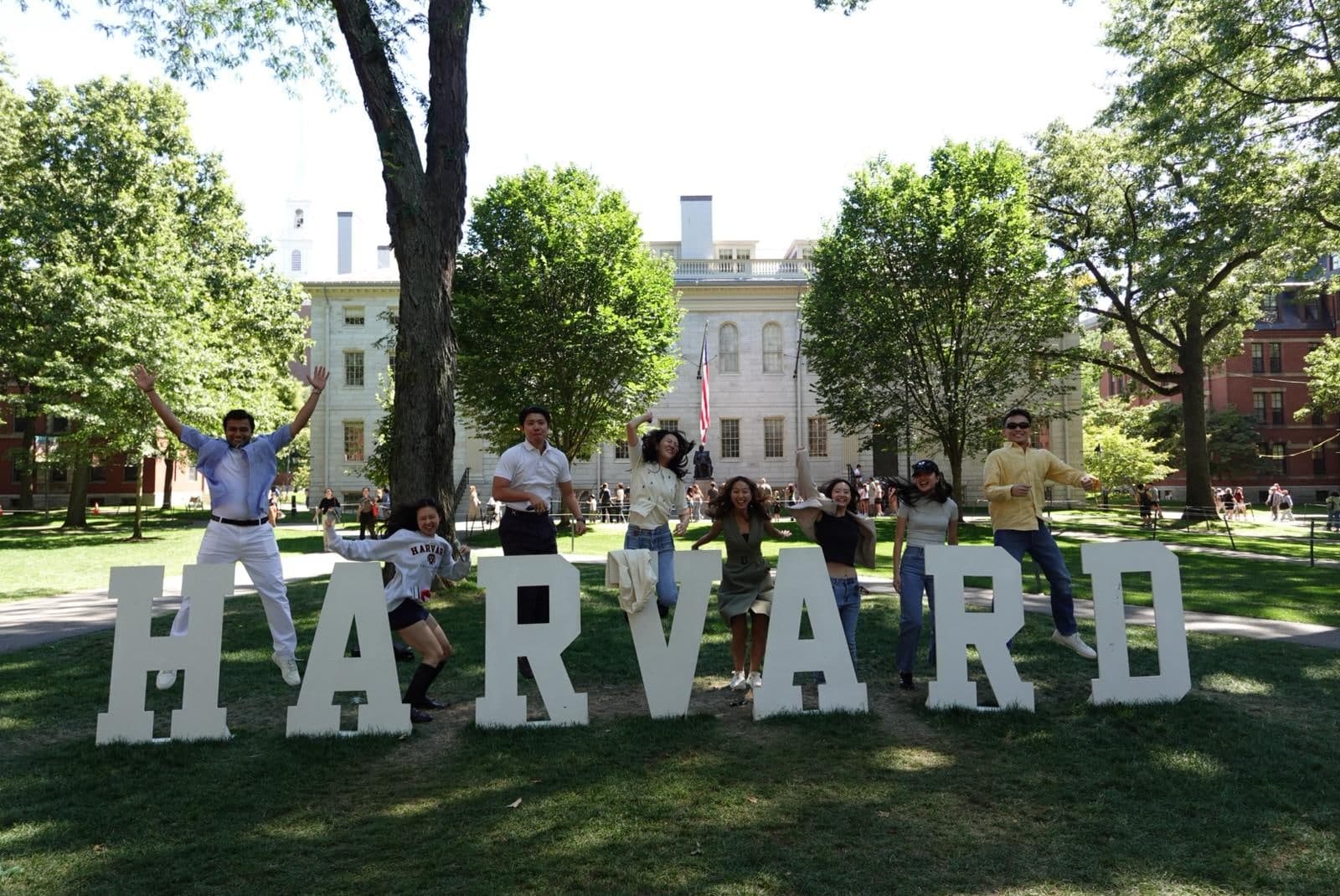
  • Hassan Ahmed with classmates in Harvard Yard
    Harvard Graduate School of Education
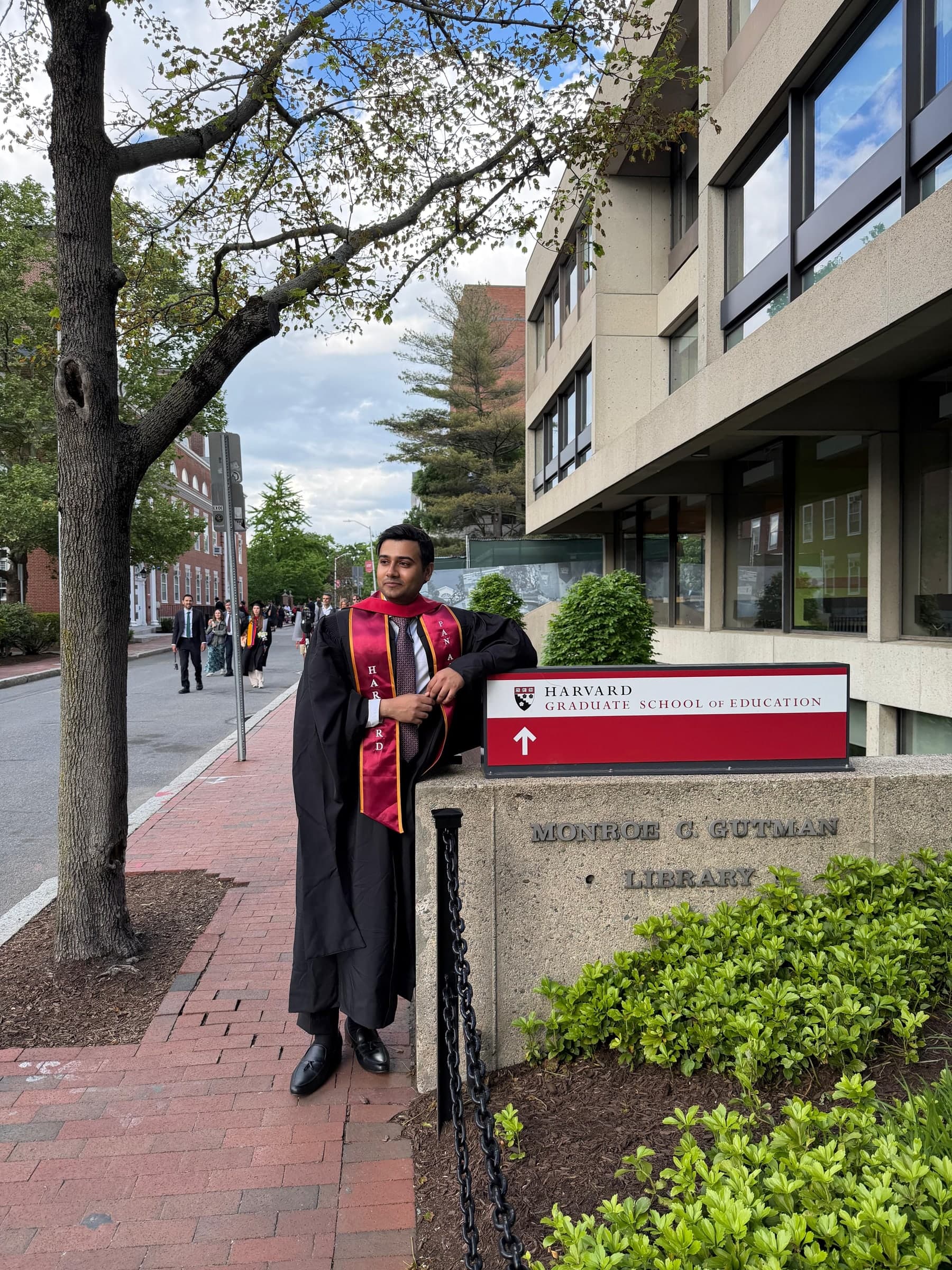
  • Hassan Ahmed in graduation robes beside the Harvard Graduate School of Education sign
    Harvard Ed.M., May 2026
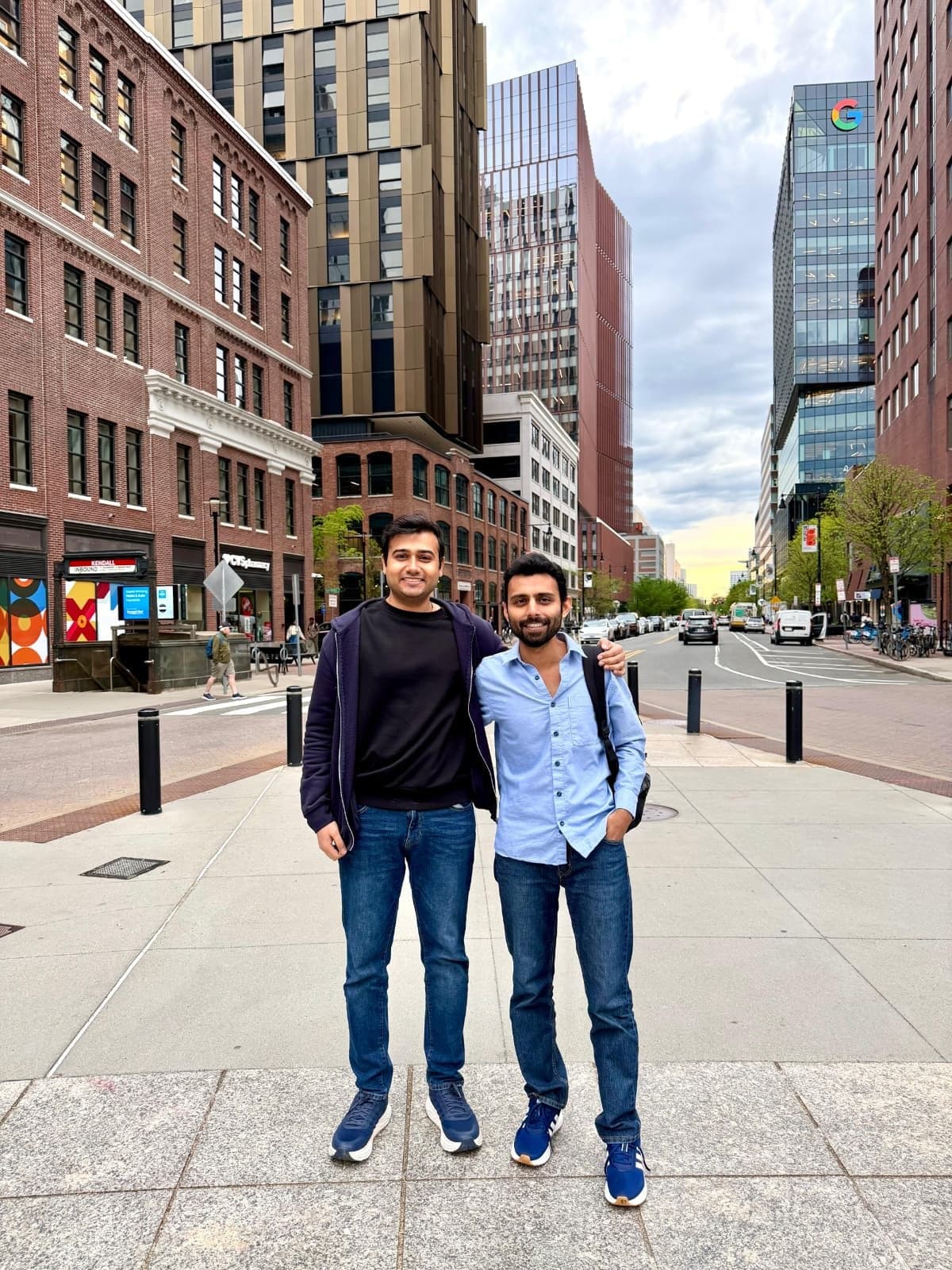
  • The ReechOut founders in Cambridge
    ReechOut founders

Selected work

Things I have built.

Eight projects across education, work, and research. Click any one to expand.

Harvard GSE · T522 Impact by Design · Dr. David Dockterman · 2025

A tutor for every child. No internet required.

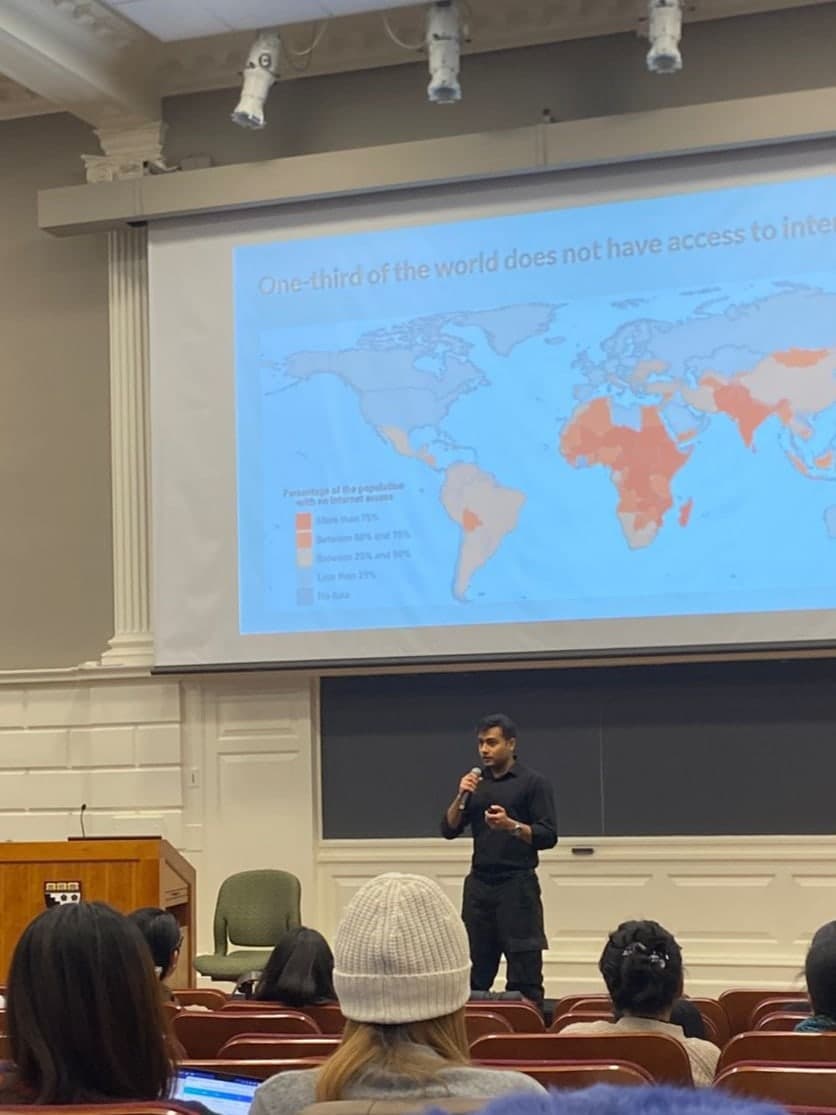
One billion children live beyond reliable internet. Most also live beyond reliable teachers. This project was built on a simple conviction: quality education should not depend on either.

Hassan Ahmed presenting in a lecture hall, with a slide on global internet access
The constraint

Tablet-based learning programs in low-resource schools have real results. Randomized trials show months of additional learning gain at under $7 per child per year. They all share the same flaw: they deliver content, not conversation. When a child is stuck or losing confidence, the tablet cannot slow down, reassure, or adapt.

What I built

A fully offline, voice-based tutoring system running on a tablet. A small language model runs on-device and controls a digital whiteboard in real time, displaying visuals and lesson content while it speaks, listens, and adjusts. The first module taught counting from one to ten in both directions, with the tutor guiding each child at their own pace.

Three versions, each harder to hear than the last

Version one worked: the tutor introduced itself, guided the child, and wrote each number on the whiteboard. Version two was field-tested in a rural school in Pakistan, and the excitement faded fast. The tutor misheard unclear pronunciation and kept asking children to repeat themselves. The voice was robotic, the pacing too fast, and students got frustrated, which was the exact outcome the tool existed to prevent. Version three was rebuilt around teacher feedback: relationship before content, slower pacing, a softer voice, and a shift from “instruction” to “emotionally attuned learning partner”.

What it taught me

Personalization is not difficulty level. It is pronunciation, comprehension speed, attention span, and the emotional state of a child who has already decided they are bad at math. The tool had to feel like someone who believed in them.

Recognition

Presented at the T522 Impact by Design showcase at Harvard GSE. Met with UNICEF’s Learning Passport team in New York, who had been working toward a similar solution and had not yet cracked the offline, conversational layer.

  • On-device SLM
  • Offline voice AI
  • Digital whiteboard
  • EdTech

Founder & CEO · 2021 to 2025 · Bootstrapped

Teaching the way I was taught, at scale.

I started HSN Academy in my third year of university, teaching olympiad math to middle and high school students over video. I ran it full-time after graduating.

Hassan Ahmed at a desk with books, a pen tablet, and a chess set
What it became

A team of twelve teachers and staff. Partnerships with 20+ schools. More than 1,000 learners across 15+ countries, mostly students in the US and Canada, plus international schools in Hong Kong, Singapore, China, and Europe. Bootstrapped from day one, profitable, growing around 30% a year.

How it grew

No ads. Distribution ran on trust: partnering with education consultants and parents, offering pilots instead of pitches, and converting pilots into long-term school contracts. I owned product, pricing, and distribution end to end.

What I learned

How to operate when failure is not an option, and that the teaching method mattered more than anything else we did. Problem-first, question-driven, no judgement on wrong answers. The students who stayed longest were the ones who had been told elsewhere that they were not math people.

learners
1,000+
countries
15+
school partners
20+
team members
12
  • Education
  • Operations
  • B2C
  • B2B2C

Harvard GSE · T127 Teaching and Learning Lab · Prof. William Wisser · Fall 2025

What if every teacher had a mentor who knew the science of learning?

Most professional development for teachers is generic, time-heavy, and disconnected from Monday morning. This project rebuilt it around AI, real cases, and how people actually learn.

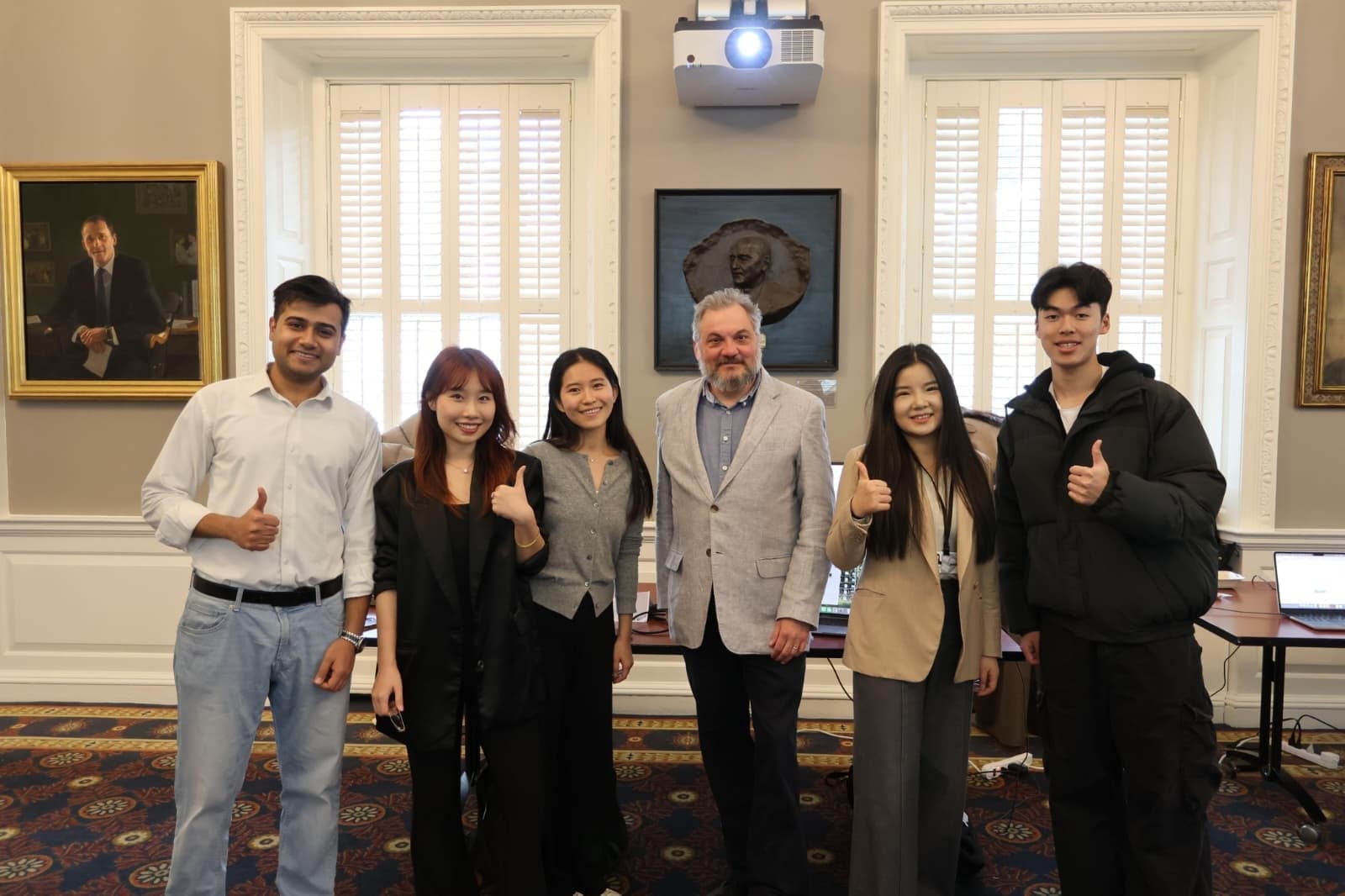
Hassan Ahmed with classmates at Harvard GSE
The problem

In-service teachers are time-poor, often skeptical of training, and working in wildly different contexts: public schools in the US, exam-prep centers in China, national curricula in Kyrgyzstan. Existing professional development is theory-first and designed for a classroom that does not exist.

What we built

A full redesign of Harvard GSE’s foundational How People Learn course for in-service teachers, centered on an AI mentor. The bot is grounded in 50+ authentic classroom scenarios and the core principles of learning science: motivation, prior knowledge, feedback, transfer, metacognition. A teacher brings a real challenge; the bot retrieves similar cases and responds with reasoning explained in learning-science terms, making the invisible logic of expert teaching visible. Four modules, backward-designed, deployed in Canvas.

The design conviction

Teachers had to critique and adapt the bot’s suggestions, not accept them. Intelligence augmentation, not substitution.

Outcome

Adopted by Harvard Graduate School of Education as a live product, now used in the online module for training teachers. Built with Katrina Kim, Taylor Yao, and Shutong Liu.

  • RAG
  • Learning science
  • Canvas LMS
  • PingPong

Co-founder & CPO · Pre-seed · Harvard Innovation Lab · 2025 to present

What if your company never forgot anything?

Most managers are the last to know when something goes wrong. ReechOut fixes that, and builds something bigger underneath it.

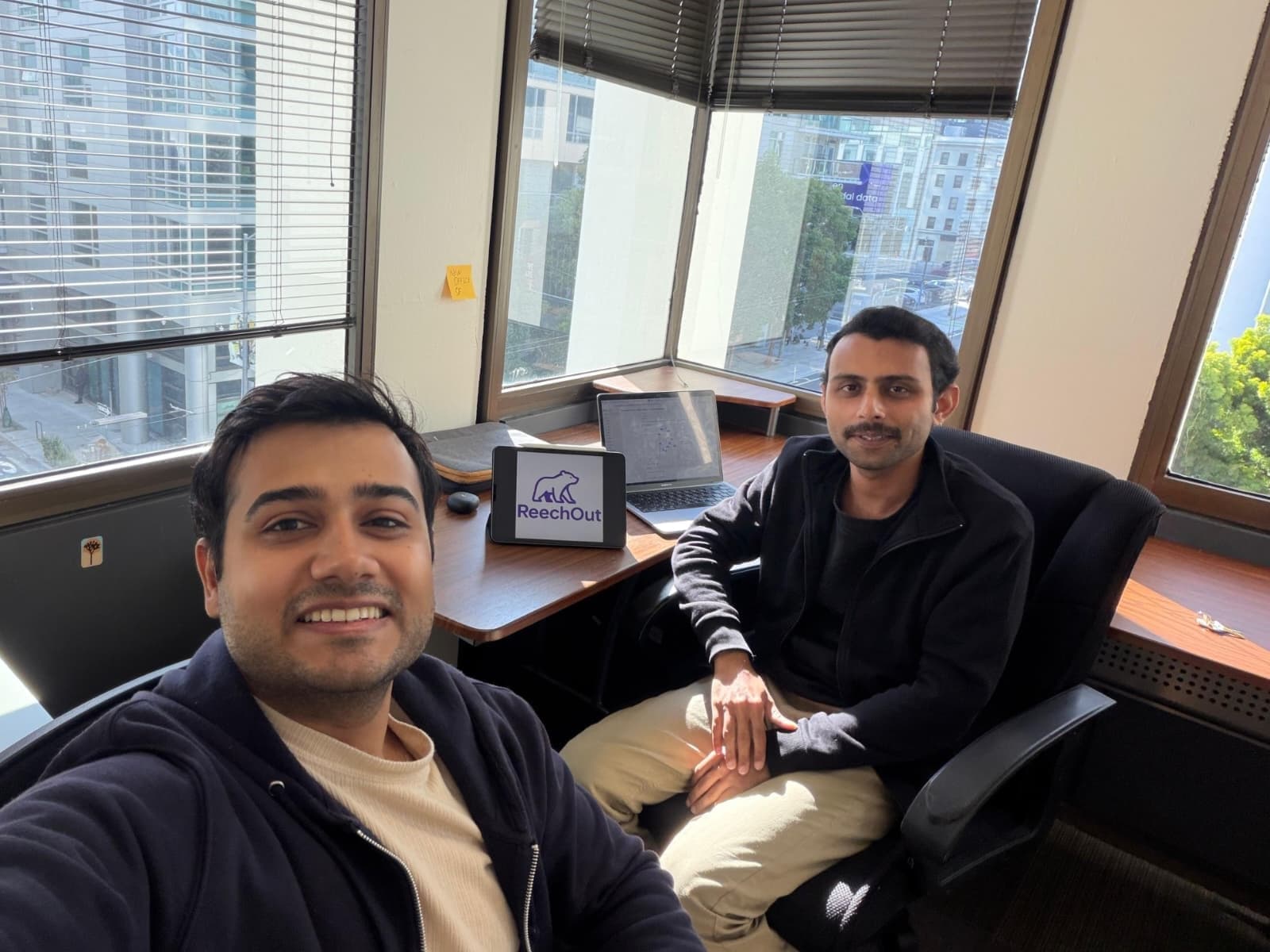
The ReechOut founders in their San Francisco office
How it works

Every employee gets a link each morning and has a short adaptive conversation, not a form. The system extracts six behavioral signals from what they say: ownership, specificity, energy, blockers by source and severity, risk flags, and the gap between the job on paper and the job in practice. The manager opens one digest at 7am: who is on track, who is blocked, what needs attention today. Skips are signal too.

The deeper idea

Every conversation is data no other tool is collecting. Over time it becomes a queryable company memory: institutional knowledge that used to walk out the door when people left, captured. The record compounds with every check-in.

My role

Designed the product architecture, the signal extraction framework, the check-in conversation engine, and the manager digest. Led customer discovery, pilot scoping, the investor narrative, and cross-functional operations with the founding team.

conversations in live pilots
1,000+
completion rate
90%
  • Python
  • FastAPI
  • LLM
  • Azure
  • Next.js

Side project · Built at Harvard · 2026

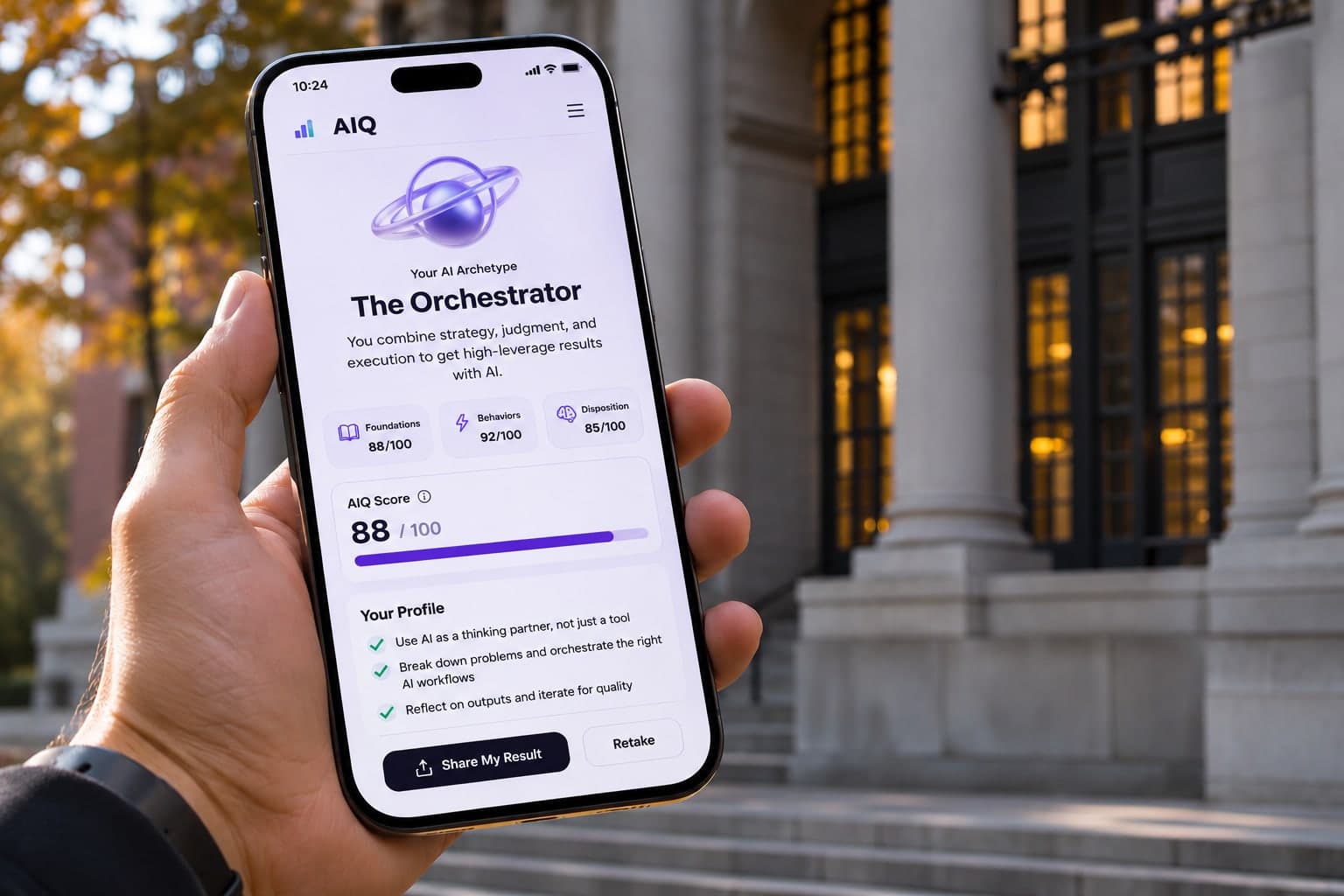
How well do you actually use AI?

Everyone uses AI. Almost nobody has measured how well. AIQ scores your AI fluency across three dimensions and assigns one of six archetypes.

  • AIQ results screen on a phone, showing The Orchestrator archetype
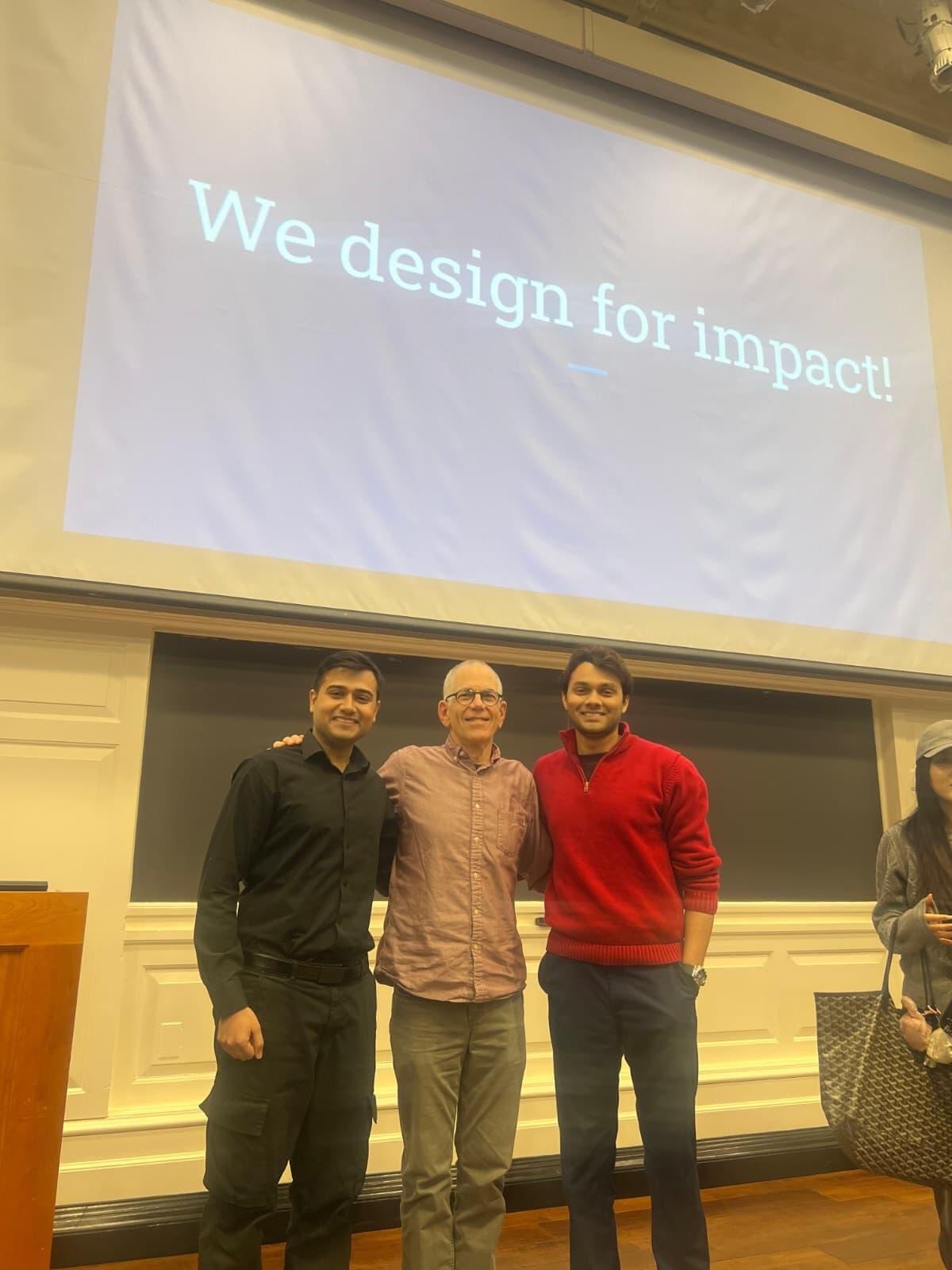
  • Hassan Ahmed with Dr. David Dockterman
    With Dr. David Dockterman, Harvard GSE
The insight

Built on Dr. David Dockterman’s cognitive partnering research at Harvard GSE. Most tools measure what you produce. AIQ measures how you think: foundations (what you understand about AI), behaviors (how you work with it day to day), and disposition (how you reflect on your own use). The framework separates using AI as a shortcut from using it as a thinking partner.

What I built

The full scoring framework, the K/B/D axis model, normalized scoring, and the archetype assignment system. All 20 questions and all archetype copy. A mobile-first web app: no login, auto-advances on answer, email capture before results, a shareable badge generated on the spot. Loads in under two seconds.

The six archetypes

The Orchestrator · The Accelerator · The Skeptic · The Explorer · The Automator · The Newcomer

  • Next.js
  • Assessment design
  • Harvard research

Harvard GSE LEAP Bot Club · with Prof. Robert Jenkins · Spring 2026

What if a professor’s advising wisdom could reach every student?

The faculty with the deepest career knowledge see the fewest students. BRIDGE (Building Routes into International and Development Global Education) was built to change that.

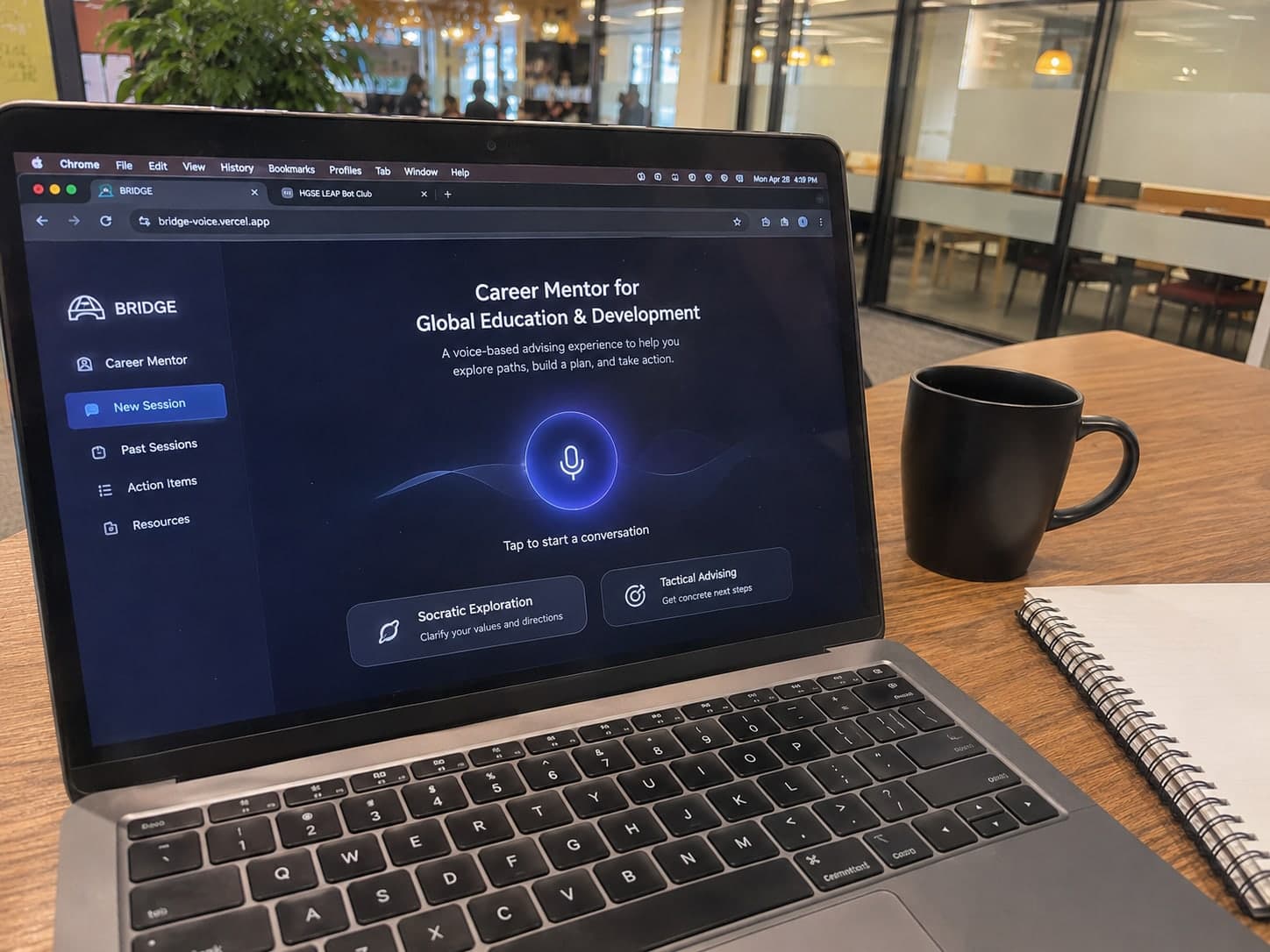
BRIDGE open on a laptop, showing the voice session screen with Socratic Exploration and Tactical Advising modes
What it does

A voice-based AI mentor for students heading into international education, humanitarian work, and global development. Two modes: a Socratic phase that surfaces what the student values and where they want to go, then a tactical phase with concrete networking strategies, realistic entry points, and next steps. Every session ends with two to four action items.

Why voice

Testing with Harvard students showed voice produced far higher engagement and completion than text. A calm conversational voice made students open up and stay. That finding drove every iteration after.

The hard problem

Getting an AI to behave like a trusted mentor instead of a generic coach: knowing when to stop asking and start advising, handling vague or discouraged students without being pushy, and delivering practical clarity no matter how the conversation started. I designed the full prompt architecture encoding Prof. Jenkins’s frameworks, ran multiple testing rounds, and iterated prompt and voice configuration each time.

Context

Selected as a Student Partner in the LEAP Bot Club. Presented at the HGSE Bot Club Showcase, May 2026.

  • Voice AI
  • Prompt architecture
  • Learning design

MIT AI Studio · with Anitej Thamma · guided by Prof. Ramesh Raskar · 2026

Trusted intelligence, not more data.

Finance is drowning in information. The problem was never access. It was trust. So we built an AI that shows its work.

What it does

Ask “Is Apple a good long-term investment?” and instead of a confident hallucination you get an answer built only from retrieved SEC 10-K filings, analyst recommendations, and live market data, with every source shown and relevance-scored.

How it works

FastAPI backend. FAISS and ChromaDB vector search over sentence-transformer embeddings. GPT-4 generates from retrieved documents plus live Yahoo Finance data. Streamlit front end with expandable source panels and a clear indicator of RAG versus fallback mode.

stocks with live pricing
10,000+
retrieval accuracy
85%+
average response
<3s
  • RAG
  • FAISS
  • GPT-4
  • FastAPI
  • Streamlit

METU · PHYS 400 · supervised by Dr. Sinan Kaan Yerli · 2020

Teaching machines to find the next Earth.

Telescopes generate more data every night than any team can read. The question was whether machine learning could classify exoplanets by habitability, not just filter false positives.

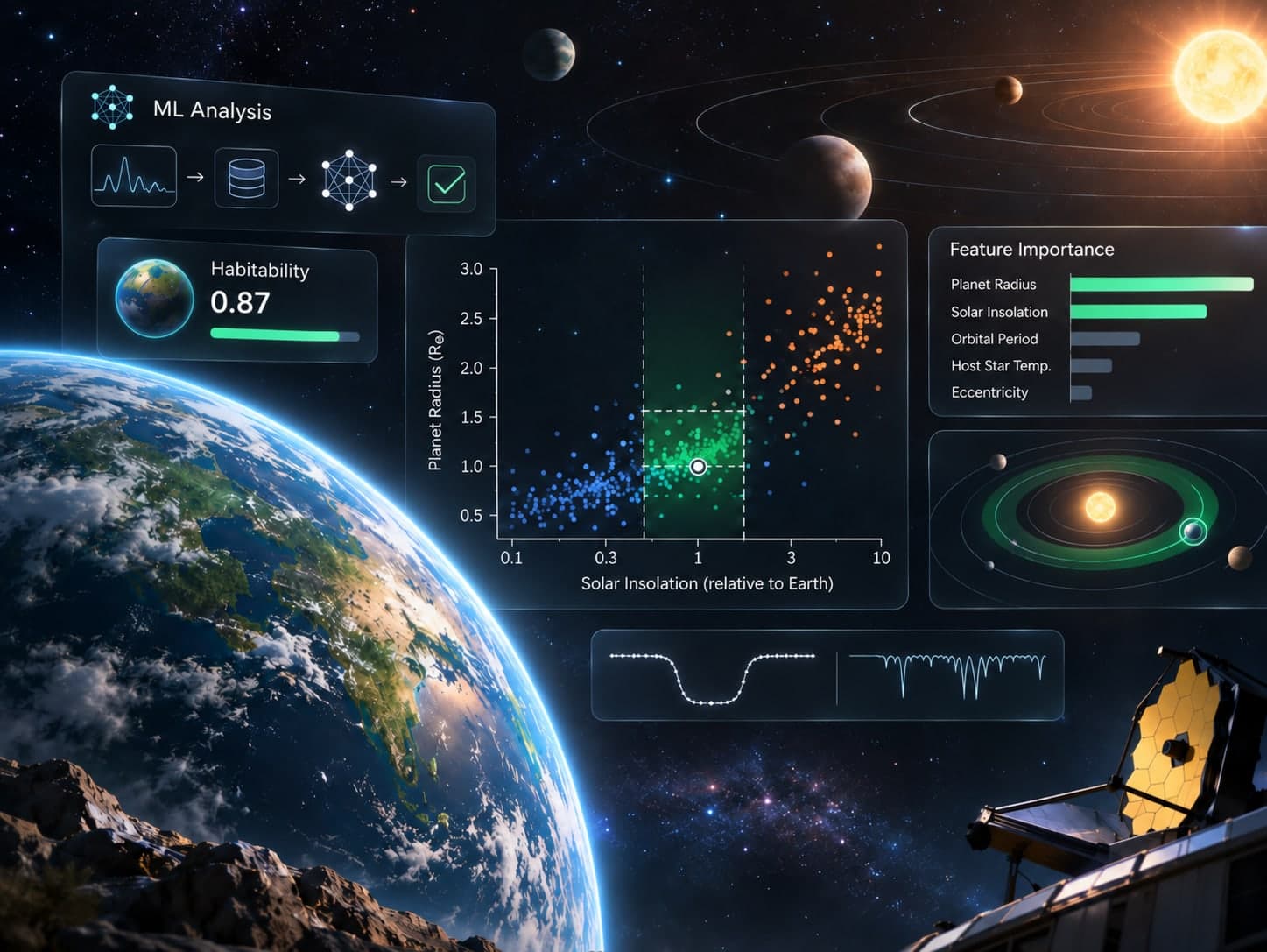
Visualization of the habitability model: planet radius against solar insolation, with feature importance
What I built

A comparative study of four models (neural network, Random Forest, AdaBoost, XGBoost) on 2,913 confirmed exoplanets from the Planetary Habitability Laboratory catalogue. Built the data pipeline from scratch: 86 raw planetary and stellar features reduced to 11 reliable observable ones, incomplete records removed, 70/30 train-test split.

The finding

XGBoost reached 99.89% accuracy, misclassifying one planet in the test set. More useful than the accuracy was what the model exposed: planet radius alone carried over 50% of predictive weight, and radius plus solar insolation together carried 68%. Habitable planets cluster tightly between 0.8 and 2.8 Earth radii and 0.2 to 1.6 Earth flux. That gives future surveys two measurements to prioritize.

Neural Network
97.48%
Random Forest
99.54%
AdaBoost
99.66%
XGBoost
99.89%
  • XGBoost
  • Keras
  • scikit-learn
  • Kepler/TESS

About

Physicist by training. Teacher by habit. Founder by necessity.

I grew up inside competition mathematics. From middle school through high school I spent more than half of every year in training camps, which is where I learned the thing that still runs everything I do: hard problems are not solved by talent. They are solved by moves, learned one at a time, practiced until they are reflexes.

After three IMOs I studied physics at METU, started teaching math online to pay for it, and found that I was better at teaching than almost anything else. That became HSN Academy, which I founded in my third year and ran full-time after graduating: a team of twelve, partnerships with 20+ schools, students in 15+ countries, bootstrapped and profitable. Along the way I coached the next generation of national olympiad contestants.

At Harvard I studied how people actually learn, worked for a year with Dr. David Dockterman on math teaching and math tools, cross-registered at MIT for AI and entrepreneurship, and co-founded ReechOut at the Harvard Innovation Lab. I am now in San Francisco, building at the intersection of AI and how people learn. I speak five languages and play chess badly on purpose.

International Mathematical Olympiad
3×
Hours of math teaching
5,400+
Students across 15+ countries
1,000+
AI products shipped
8
Companies founded
2

What I believe about learning

  1. 01

    Problem-solving is a skill, and skills are made of moves.

    The best coaches do not teach answers. They teach the small, nameable moves that experts make without noticing, and they make students practice them until the moves become reflexes.

  2. 02

    Nobody is bad at math. They were paced wrong.

    Every student I have taught who said “I am just not a math person” had been moved past something before it clicked, and never got to go back. The gap was never ability.

  3. 03

    An AI tutor that delivers content is a worse textbook. One that holds a conversation is a better teacher.

    I learned this the hard way, field-testing a voice tutor with children who had already decided they were bad at math. Warmth and pacing were not features. They were the product.

Contact

If you are building something in learning, or thinking about it, I would like to hear from you.